
Industrial Hygiene (IH) Source, Area & Personal Data
Tank Farm industrial hygienists have conducted emission source sampling and monitoring at breather filter outlets, above-ground riser penetrations, pit covers, etc. This was done to:
- Identify the locations of emission sources for establishment of buffer zones
- Confirm tank headspace and ventilation system characterization data did indeed represent maximum source concentrations
- Test for selected source chemicals without conducting full headspace characterization
The IH source data with headspace characterization data can be used to identify what chemicals are likely to be present in the worker breathing zone and estimate their maximum concentrations, but worker protection must be based on actual workplace data. Workplace data can come from monitoring or sampling the worker breathing zone. Personal samples are collected to establish the time-weighted average (or other regulatory limit) concentration of vapors to which the worker has been exposed. Monitoring is conducted with direct reading instruments (DRI) and colorimetric devices (e.g., Drager tubes) that provide essentially real time field measurements. Sampling, which entails subsequent laboratory analysis of the samples, is conducted to identify and measure chemicals not specifically addressed by monitoring methods.
Area characterization data may be collected using sampling devices which have the capability of measuring the concentrations of all COPCs or through area monitoring devices capable of measuring some of the COPCs. Area characterization data are typically collected from several fixed locations considered representative of the worker breathing zone (not at sources such as the breather filter of an SST).

Industrial Hygiene (IH) Sampling
Sampling pumps are utilized for area/personal sampling in conjunction with sample collection media and Tedlar® bags.
Sampling Pumps


Sample Collection

Tedlar® Air Sample Bags
Utilized to collect grab air samples for
DRI analysis and sampling media, as necessary, for offsite analysis.

Sampling Media
Sampling media are sent to laboratories (ALS, AssayTech, Bureau Veritas, RJ Lee) for analysis.
• Sorbent media
• Passive badges (e.g., nitrous oxide badges)
• Particulate filters

Hapsite®
Portable Gas
Chromatography-Mass Spectrometer (GC-MS)
Historical
Direct-Reading Instrument (DRI) Monitoring
Direct Reading Instruments (DRIs) are utilized to measure real-time vapor concentrations.
Examples include:

ppbRAE
The ppbRAE uses a photo-ionization detector (PID) to monitor total VOCs.
Historical

iTX
Multi-gas monitor utilizing:
• Electrochemical cell technology to detect ammonia, oxygen, carbon monoxide, and other toxic gasses.
• Catalytic bead sensor (Wheatstone bridge) to detect flammable gases.
The ITX was used to detect the presence of flammable gases/vapors and oxygen.
Historical

RAE Systems – MultiRAE Pro.
Combines the technologies of the ppbRAE and iTX.
Multi-gas monitor utilizing:
• Electrochemical cell technology to detect ammonia, oxygen, carbon monoxide, and more.
• Catalytic bead sensor (Wheatstone bridge) to detect flammable gases.
• Photo-ionization detector (PID) to detect total VOCs.

AreaRAE
Multi-gas monitor utilizing:
• Electrochemical cell technology to to detect ammonia, oxygen, carbon monoxide, and other toxic gasses.
• Catalytic bead sensor (Wheatstone bridge) to detect flammable gases.
• Photo-ionization detector (PID) to detect total VOCs.
AreaRAEs are capable of remote detection and can be placed in and around the farms at various locations for extended periods of time. Mainly used to detect VOCs and Ammonia in general area locations.

LUMEX
Utilizes ultraviolet technology to detect mercury vapors.

MIRAN SapphIRe
Utilizes infrared technology to detect nitrous oxide and an extensive standard library of various other chemicals.
Historical

Dräger Sampling Tubes
Sorbent colorimetric sampling tubes utilizing a billows-style pump to
collect a snapshot, real-time, gas/vapor concentration.
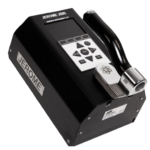
Jerome J505
Uses fluorescence spectroscopy technology to detect elemental mercury vapors.